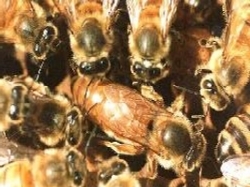
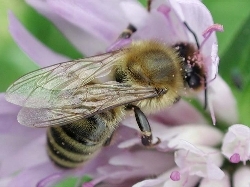
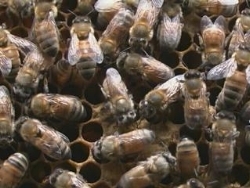
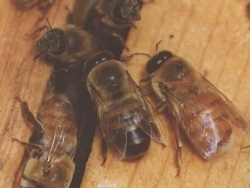
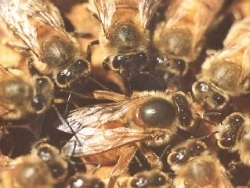
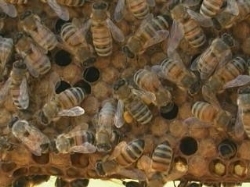
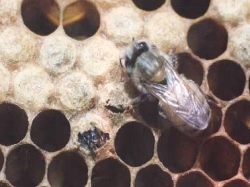
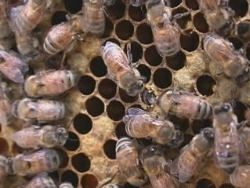
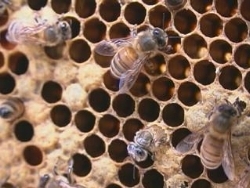
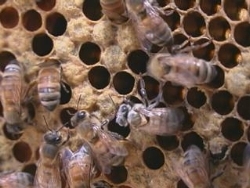
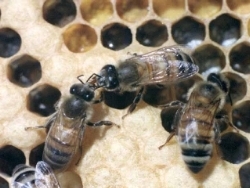
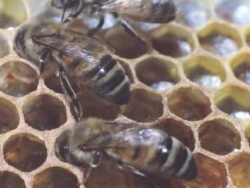
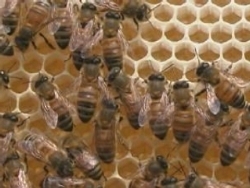
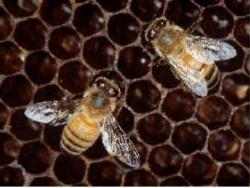
Hives usually have one queen bee who is the mother of all bees in the hive. She is the only fertile female in the hive.
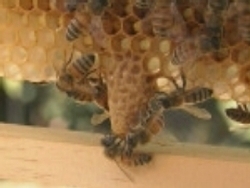
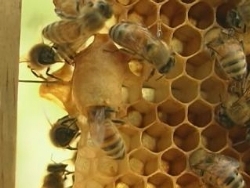
The queen cell is substantially larger than worker or drone cells. It resembles a peanut in size and appearance
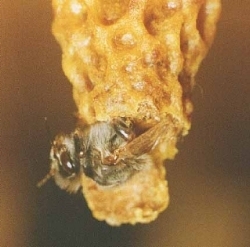
The queen cell is stocked with extra royal jelly, a rich food secreted by the worker bees. This boosts her growth and causes her to fully develop sexually.
When mature, the new queen emerges from her cell. She'll hunt and attempt to kill any competitor queens and mate with one or more drones (inflight).
The worker bee is also a female. Although capable of laying eggs, she does not normally do so. If she lays eggs, they will produce only drones.
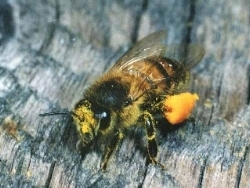
Bees can be yellow, black or gray depending on variety. This worker bee is returning from the field with a load of pollen on each hind leg.
The workers care for the young, forage for food and water, build combs, and clean, heat/cool and defend the hive.
The male honey bee is called a drone. He is the product of an unfertilized egg and therefore has only one set of chromosomes.
When a hive becomes crowded, it raises a new queen, then half the bees leave with the old queen just before the new queen emerges from her cell.
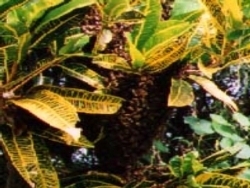
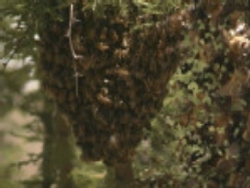
A mass of bees seeking a new home is called a swarm. They'll often assemble on a branch while scouts look for a permanent home.
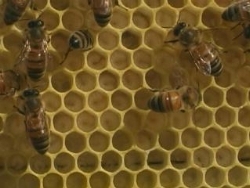
After the workers construct a comb, the queen inspects each cell. If satisfied, she backs into the cell to deposit an egg.
The tiny white cylindrical objects are eggs. The queen can choose to lay fertilized (female) or unfertilized (male) eggs.
When the egg is fully developed, the grub-like larva emerges.
The larva continues to grow, never leaving the cell until mature.
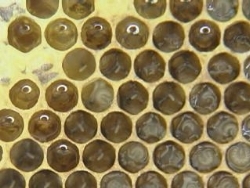
The shiny material is the royal jelly fed to the larvae.
Larvae at varying stages of development.
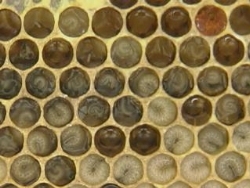
Larvae continuing to grow.
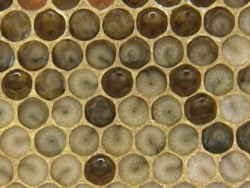
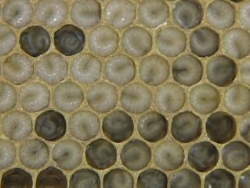
Larvae nearing the end of the larval stage.
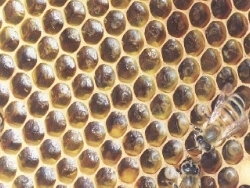
Adult worker bees cap the cells to begin the pupa stage of development.
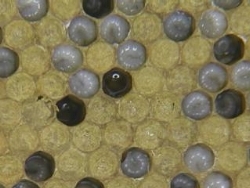
Larvae and pupae in adjacent cells.
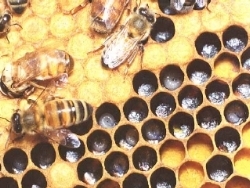
Capped cells containing bee pupae.
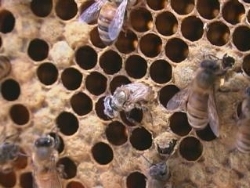
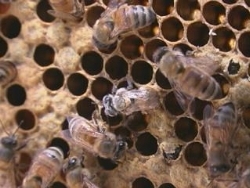
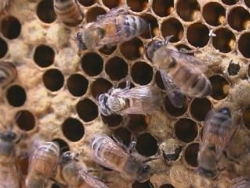
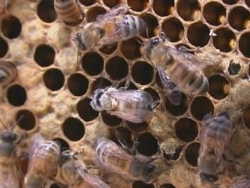
When the bee matures, she chews away the cell cap.
Other workers inspect this newly emerging worker.
New worker bee crawling out of its cell.
She's almost out. Other workers in nearby cells are escaping too.
Note that the new worker is hairier and lighter than her sisters.
She'll darken quickly and her hairs will gradually wear away as she performs her duties.
The role each worker plays is determined by age. The younger bees usually serve the hive by tending and feeding the larvae.
Before she begins her duties, she'll got out for an orientation flight.
Note the pollen storage in the top row of cells. Pollen provides the protein in the developing bee's diet.
More pollen storage. Pollen is normally stored near the brood.
This comb contains nectar. The bees will fan their wings to lower the moisture content. When satisfied with the viscosity, the workers will cover the honey with a cap of wax.
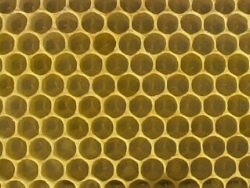
This comb is much darker than the one in the previous picture. The wax is secreted by the workers and formed into cells. When new, it's a pale yellow. It darkens each time a cell is used to raise a new bee.
While we thank them for their support of this website, the ol' Buffalo had no role in picking the GoogleAds herein. Their appearance is not an endorsement by the Ol' Buffalo.